
“Understand the Moment We’re in:” Daryl Messinger Reflects on her Tenure as Board Chair
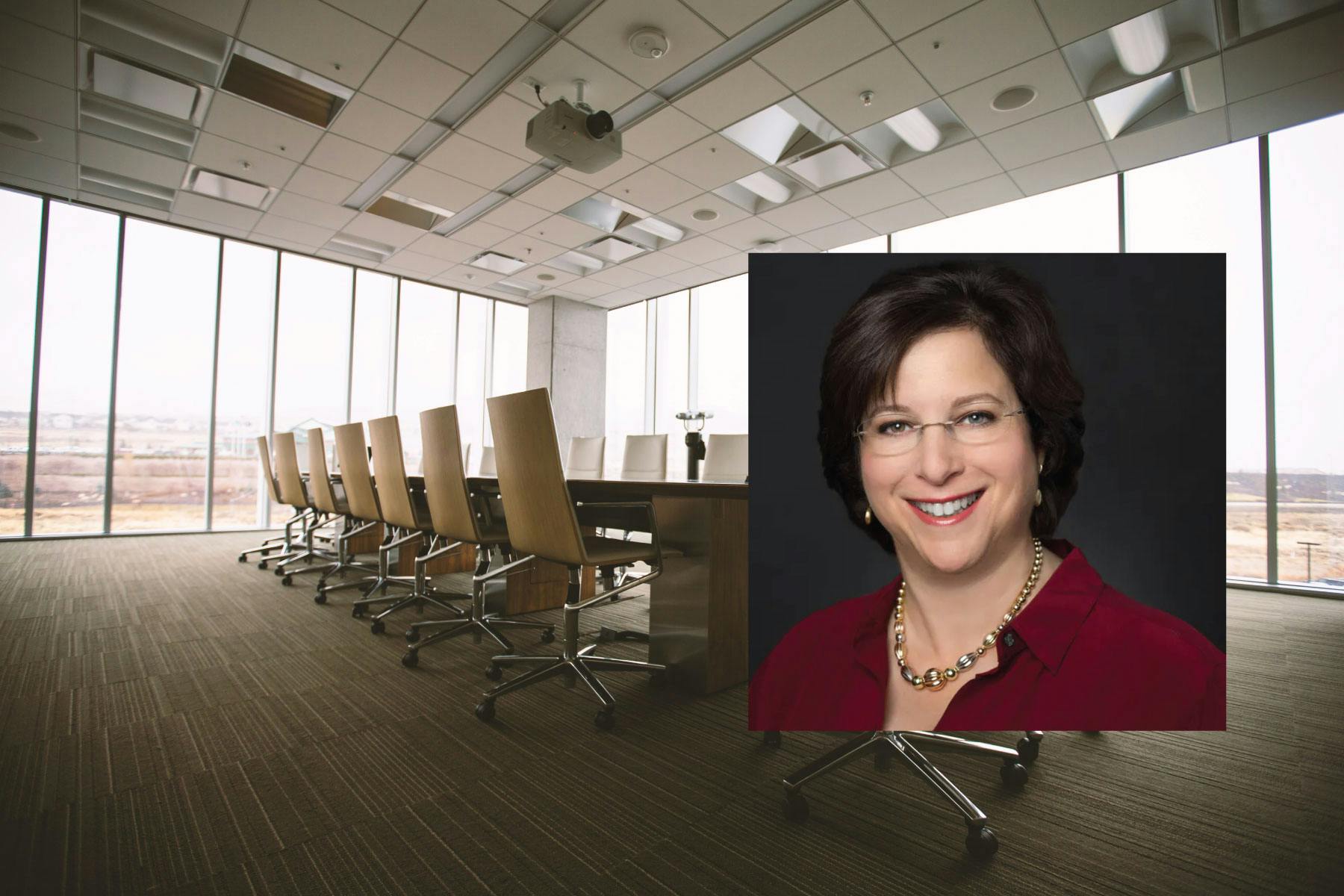
From 2023 through 2025, Daryl Messinger has served as Board Chair of Leading Edge, shepherding the organization through a period of expansion, challenges, and changes.
This leadership term is just the latest in a series of high-profile governance roles in the Jewish community for Daryl, not to mention her previous private sector career. Daryl has chaired and/or served on the Boards of many Jewish organizations, including (most prominently) chairing the Board of the Union for Reform Judaism, as the first woman to serve in that role.
As her term of service draws toward an end, we sat down with Daryl to reflect on the eventful past three years at Leading Edge.
What is your “Big Why” as a leader in the Jewish nonprofit world?
I want to see Jewish organizations thrive and grow, in order to create great Jewish spaces, and to make a better world. That’s why I choose to devote my time and energy and resources to primarily Jewish organizations.
When you think back on your term as Board Chair of Leading Edge, what moments make you feel proudest?
I’m most proud of the way we showed up during these last two years of tremendous pain and suffering in Israel, with a spike in antisemitism across the country, and a real need for folks who are working in our sector to have clarity and professional direction. I’m very proud of the organization and how we responded in what has been a very fraught time.
At the same time, I’m amazed at how much we accomplished in a very difficult period. You know, I started my term and we had just acquired Boardified. And we have now launched our Board Experience Survey and are launching a new Board offering in early 2026, the Board Leadership Accelerator.
We furthered our understanding that with talent, you can’t just focus on the C-suite. For organizations to really achieve their missions, it is not enough to identify and attract great leaders. Organizations need to create a culture where people want to work and have an appreciation for talent at every level. I’m thrilled that we were able to combine with JPro, a storied organization, so that we could truly serve as the central address for all talent, culture and leadership. And that occurred at the beginning of this year, and in no time flat we were in the throes of JPro25, and had an awesome conference. So all of those things, I think, are a testament to this organization.
What does it feel like to look back on that level of growth and change?
We need to stop from time to time and appreciate how much progress this organization has made since I became Board chair three years ago. I had to take a medical leave in April. And when I came back in early June, I was blown away by how much progress had happened. This organization was just humming. And it’s a lot of change, and change, let’s face it, is hard. You know, the Board has continued to evolve, but more importantly, so has the professional team. Everyone has really stepped up and taken on new responsibilities, and broadened their portfolios in ways that I don’t think any of us would have necessarily envisioned three years ago.
When we interviewed you when you were just becoming Board Chair, one of the things you talked about was the importance of shared leadership. Are there any moments or stories from your partnership with Gali that resonate for you as significant experiences in shared leadership?
With both the acquisition of Boardified and the coming together with JPro, Gali and I had each other’s back, and we were also each other’s “noodge.” In both instances, I was encouraging the deals to get done, to take the risks, to take the leap and do it. I was not the visionary who said, “This is what we have to do” — that was Gali and others. But my role as Board Chair was to provide confidence that it would be okay — that there would be unknowns, but we would manage through them, and that the Board and others would have the organization’s back. But without colleagues, leadership, vision, and ability to navigate difficult conversations, which always happen when you’re combining organizations, we wouldn’t be here. And those aren’t necessarily my skill set! So I’m the one who will push to get something done; Gali makes sure it’s done right.
In that welcome interview, you also mentioned choosing where to invest time as one of the most important choices to make. Looking back on your term, what ended up being the highest leverage use of your time as the chair?
As a sounding Board for Gali, for sure. But I also came to understand, because I had to take a leave, that no one person is essential or indispensable. And I was really proud of how everyone stepped up. I was thankful that Joe Kanfer was willing to be Acting Chair. It was not something he was planning to do at that particular moment, and it was a really important indicator of the health of the organization that I could take that time.
Well, speaking of Joe… Joe will soon be succeeding you in the Board Chair role. What skills and qualities have you observed in Joe that you feel can most help him succeed as chair?
Joe’s a brilliant business leader and has lots of insights about “the leadership molecule.” He brings deep, broad leadership experience within the Jewish community, not just in his business. And he’s seen it all, from the smallest start up to the largest umbrella organization. He’s got an incredible versatility with and knowledge of Jewish wisdom and a strong belief that we need to bring that into everything we do. He leads through a Jewish lens, and in many ways, has already helped shape the direction of Leading Edge.
We know that Board excellence is a growth opportunity for Jewish nonprofits across the field. If you could write a single sentence on a sticky note that would be magically placed on the laptop of every single Board member in the Jewish communal sector, what would the note say?
It’s a quote that I have on my desk. It’s from Ron Heifetz and Marty Linsky. (Marty used to sit on the Leading Edge Board.) It says, “The single biggest failure of leadership is to treat adaptive challenges like technical problems.” All too often, I find Board members thinking about the challenges their organizations face in the rearview mirror. Jewish organizations today face adaptive challenges. What got us here won’t get us there. And we need leaders who can think differently, act differently, understand the moment we’re in, and be future-ready.
About the Author

Leading Edge raises the standard for talent, culture, and leadership across the Jewish nonprofit sector. We work with professionals, executives, and board leaders to build stronger organizations and drive their missions forward.

Loading footer...